
Case studies in Machine Learning and AI
What Is Possible with Artificial Intelligence
Artificial intelligence is exciting when it not only impresses but also lightens the workload in everyday life. Potential applications arise wherever information can be processed, decisions can be prepared, or recurring tasks can be automated. Our case studies show how these ideas are turned into concrete software solutions.
- Understanding and Organizing Information
AI can analyze unstructured content and convert it into usable data—for example, from emails, PDFs, audio files, or technical documents. This makes the information not only readable but also machine-processable.
- Automate Processes
Recurring tasks often follow clear patterns: checking, sorting, forwarding, or preparing. AI can support these workflows without requiring the entire process to run autonomously.
- Making Knowledge Accessible
Companies have a wealth of knowledge, but it isn't always where it's needed at the moment. AI can make internal documents, product data, or knowledge databases searchable and help employees find the right answer more quickly.
- Prepare for Decisions More Effectively
AI does not replace entrepreneurial thinking, but it can improve the basis for decision-making by recognizing patterns, comparing data, and providing structured recommendations. However, the final decision remains with humans.
Webshop Price Adjustments
An AI agent identifies comparable products in competitors' online stores and provides pricing recommendations, which are automatically implemented following a review by a staff member.
At a glance
Customer
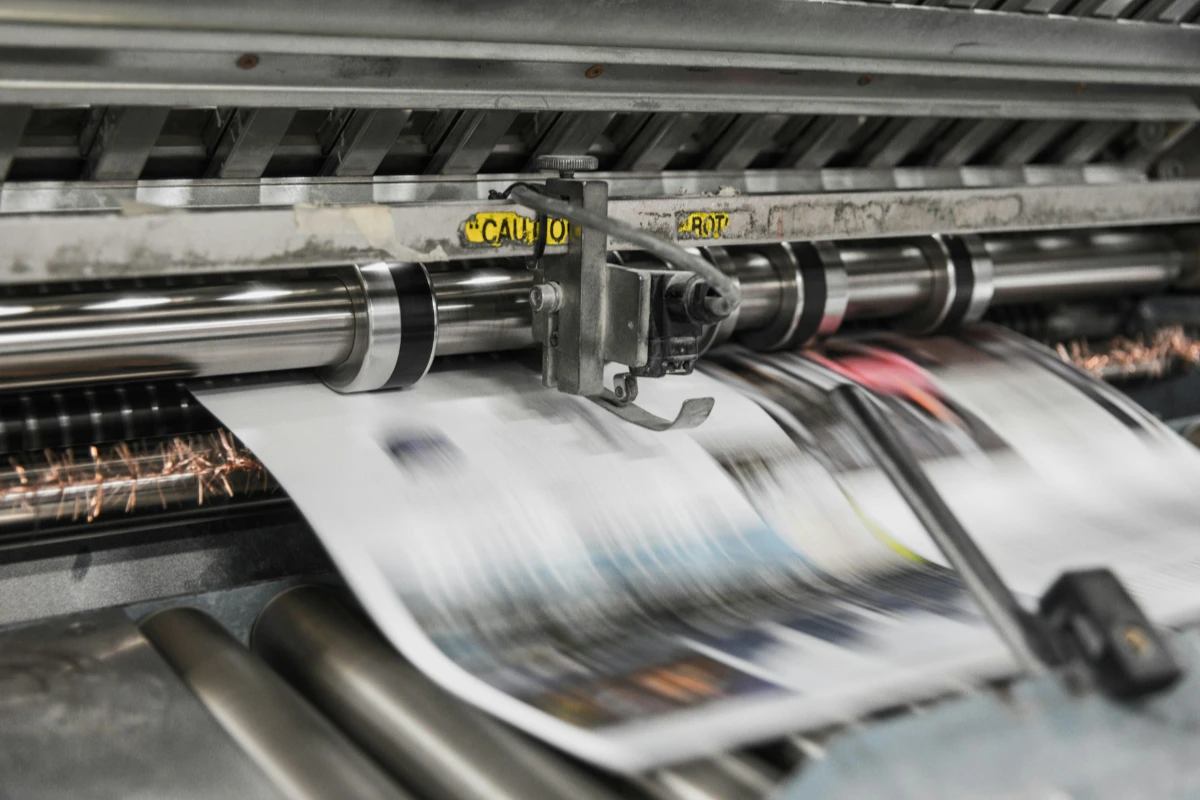
A web printing company with an extensive online store operating in a highly competitive market characterized by constantly fluctuating prices.
Starting point
Pricing was heavily dependent on the market, yet at the same time only partially data-driven. Competitors were monitored manually, and prices were adjusted occasionally. The problem was that the market moves faster than we can keep up with. Furthermore, products are rarely directly comparable. A flyer is not simply a flyer; paper weight, format, finishing, print run, and many other factors come into play. This makes it correspondingly difficult to compare prices meaningfully. Decisions were often based on partial information or experience, which inevitably led to inconsistencies.
Goals
The goal was to make price monitoring and adjustments significantly more systematic. The aim was to automatically analyze competitors, identify relevant products, and compare them with the company’s own catalog. This process was intended to generate well-founded, transparent pricing recommendations. However, the final decision remains with a company employee.
Concept
The solution is a system that collects publicly available product and price information from defined, authorized sources, using HTML parsing or available APIs depending on the source. An AI agent analyzes the products found and compares them with the company’s own product range. Descriptions, attributes, and specifications are semantically compared to identify meaningful matches even when names and structures differ. In a Laravel-based web interface, suitable competitor offers, price ranges, and a rule-based recommendation are displayed for each of the company’s own products. The calculation bases can be maintained via Excel import. An employee reviews the suggestions, adjusts them as needed, and approves them. Only then are the new prices updated in Shopware via an API.
Challenges
A key issue was the legal classification. Not every online store permits the automated extraction of data, and depending on the provider, such solutions can quickly end up in a legal gray area. Here, it was important to proceed with care and selectivity, as well as to develop a sound data acquisition strategy. Before connecting to external competitor data sources in production, we work with the client to determine which sources are technically and legally viable. In doing so, technical protective measures on the part of competitors are never circumvented. Competition law also played a role, particularly regarding the extent to which prices may be automatically aligned with the market. Accordingly, the system was designed to provide recommendations but not to make automatic pricing decisions.
Results
The effort required for market monitoring has decreased significantly. Instead of manually checking individual prices, a structured overview is now available that is continuously updated. Price changes in the market are identified more quickly and can be addressed in a timely manner. At the same time, the predefined rules ensure that margins are not undersold. The bottom line is that a robust foundation for data-driven pricing decisions has been established, paving the way for more advanced, dynamic pricing strategies.
Structured Product Information
We helped an industrial company use an AI agent to automatically extract product information for hundreds of products from various sources and prepare it for the relevant employees.
At a glance
Customer
A medium-sized manufacturing company with a broad product portfolio, ranging from standardized components to more complex products that require detailed explanations. While product information does exist, it is not standardized and is scattered across numerous systems and documents.

Starting point
Product data was available, but rarely where it was needed at the moment, and, above all, not in a standardized format. At the same time, demands were growing from sales partners and resellers, whose online stores require structured, clean product data, ideally in a format that can be imported directly. Preparing this data manually is extremely time-consuming for a product range that has evolved over time. In this case, “historically evolved” meant that the creation and maintenance of product data had never been standardized, but was instead handled on a case-by-case basis by the respective employee who was working on it at the time, in whatever way they deemed appropriate. On top of that, the employees were already fully occupied with day-to-day business and had no time available for data preparation. At the same time, the implementation of a PIM system was still in its infancy.
Goals
The goal was to generate usable product data from the existing unstructured information. Relevant technical features and characteristics were to be automatically identified and extracted, regardless of their source. This data was then to be converted into a uniform format and made directly usable in the PIM system. It was important that the process be largely automated, but remain verifiable by employees at critical points.
Concept
In a Laravel-based web app, documents and texts can either be uploaded directly or imported via interfaces. An AI agent extracts relevant content, identifies technical characteristics, and formats the information into a defined, structured format. What makes this unique is the semantic understanding of the content, for example, recognizing that “max. pressure 10 bar” is a specific product attribute. The results are displayed in the web app and can be reviewed by the relevant department and corrected if necessary. This step is intentionally included to ensure quality and trust. After approval, the data is automatically transferred via API to the Akeneo PIM system, where it is immediately available for further processes, such as for web shops or catalogs.
Challenges
Technical details were scattered across data sheets, catalogs, ERP entries, and sometimes even emails, and were often incomplete. Some of the documents were technically complex, containing tables, inconsistent formats, and, in some cases, highly specialized technical language. The data processing system had to be robust enough to handle even imperfect input. In addition, not all information was always complete or unambiguous. The system therefore had to not only extract data, but also recognize when something was missing or uncertain and flag these cases accordingly.
Results
Within a short period of time, product information for several hundred items was automatically processed. Data quality has improved significantly, primarily due to the standardized structure and the improved accessibility of information. The manual effort required per product has decreased significantly. Instead of researching data from scratch, the focus is now primarily on verification and fine-tuning. At the same time, a solid foundation for the PIM system has been established, upon which further processes can be built seamlessly.
Automated Answering Machine
Incoming messages on a group practice’s voicemail are analyzed by an AI agent. The messages are summarized in a web interface, eliminating the need for the time-consuming morning review.
At a glance
Customer
A group practice with several specialists and a correspondingly high volume of calls. Patients call with a wide variety of concerns, ranging from scheduling appointments and asking about test results to reporting urgent issues. The phone often rings nonstop just when the team is already at full capacity.

Starting point
Many calls go unanswered and end up on the answering machine. Listening to and following up on messages takes a significant amount of time each day, time that is actually needed elsewhere in the day-to-day operations of the practice. On top of that, not every message is immediately clear. Information is missing, misunderstood, or lost in the midst of the chaos. This leads to follow-up questions, delays, and ultimately, dissatisfied patients.
Goals
The goal was to make managing voicemail messages more efficient without relinquishing control. Incoming messages should be automatically transcribed into text and their content analyzed. Relevant information, such as the nature of the request, urgency, or a request for a callback, should be presented in a structured format. Based on this, requests should be prioritized, categorized appropriately, and initial follow-up actions should be triggered automatically.
Concept
From a technical standpoint, we’ve integrated the existing voicemail system via Sipgate with webhook support. Each new message is converted to text as an audio file using WhisperAI. A language model then performs semantic analysis. It identifies the subject matter, the urgency of the request, and which information is relevant. Based on this, predefined workflows are triggered, which control the messaging system of the existing practice software to schedule appointments or send notifications to the practice staff.
Challenges
The biggest challenge was integration. The existing practice software is functional, but it wasn’t primarily designed to communicate seamlessly with external systems. This required us to develop an interface to enable communication. A second key consideration was data protection. Especially in the healthcare sector, the handling of sensitive information is non-negotiable. Accordingly, in close consultation with the client’s data protection officer, we ensured strict segregation, minimal data storage, and controlled access paths during processing.
Results
The manual effort involved in managing the answering machine has been significantly reduced. The team no longer has to listen to every single message; instead, they work with structured, clear information. At the same time, fewer details are lost, and urgent matters are identified more quickly. This is also noticeable from the patients’ perspective. Feedback is provided more quickly and reliably, which is directly reflected in patient satisfaction. Overall, a process has emerged that runs noticeably more smoothly, even though the volume of calls has remained the same.
Ready to take the next step?
Have we sparked an idea for you? Whether it’s an AI agent, automation, or a seamlessly integrated custom solution: Tell us what you’re looking for. Together, we’ll explore what makes technical sense, where the greatest value lies, and what a first practical step toward that goal might look like.

Oliver Schweissgut
Shareholder and CEO

Christian Seewald
Chief Executive Officer